abstraction is the process by which you decrease the amount of detail in a problem in order to make it easier to solve without as much distraction some examples are:
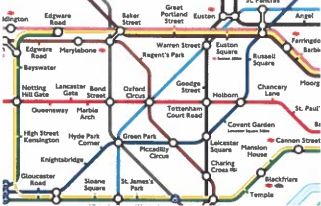
allows for people who are travelling to easily be able to tell where they are going and which train to catch, but is not the actual positions of the rail lines.
preconditions are used to make programs shorter and more readable by providing a condition that must be met at the beggining of that subroutine in order for it to do the rest of it
by having more readable code it is easier for others to understand and change/improve your code
This is when you break down a problem into smaller but still major tasks,
these smaller tasks can be broken down into more smaller tasks until the problem can be solved by writing multiple small functions/subroutines
This is useful since it is much easier to test and maintain the code as errors can easily be found in the functions and then fixed,
this leads to the simple way of displaying this decomposition:
this is a diagram where there is a box(the main problem) which is split into multiple boxes,
each focused on a part of the overall problem, and boxes come from these boxes to display the whole Hierarchy
and simplify the problem while also clearly showing how each part is used to solve the overall goal